
New World Screwworm: Fact Sheet & SHIC Article 6/10/2026 & USDA NWS Website & SHIC/AASV NWS Webinar (8/4/2026)
According to a World Organisation for Animal Health report, African swine fever has been confirmed in Taiwan on a pig farm located on the western coast of the island nation (Figure 1). This is the first ASF occurrence in Taiwan. Samples were sent to the National Reference Laboratory for diagnosis on October 21, 2025, due to increased mortality rates. On October 25, 2025, the outbreak was confirmed as ASF. All control measures have been implemented since October 21, 2025. There were 301 susceptible pigs on the affected farm with 109 ASF cases noted and 106 deaths. The remaining 195 pigs on the farm were euthanized. WOAH reports that all appropriate response actions are being taken in Taiwan to limit the spread.
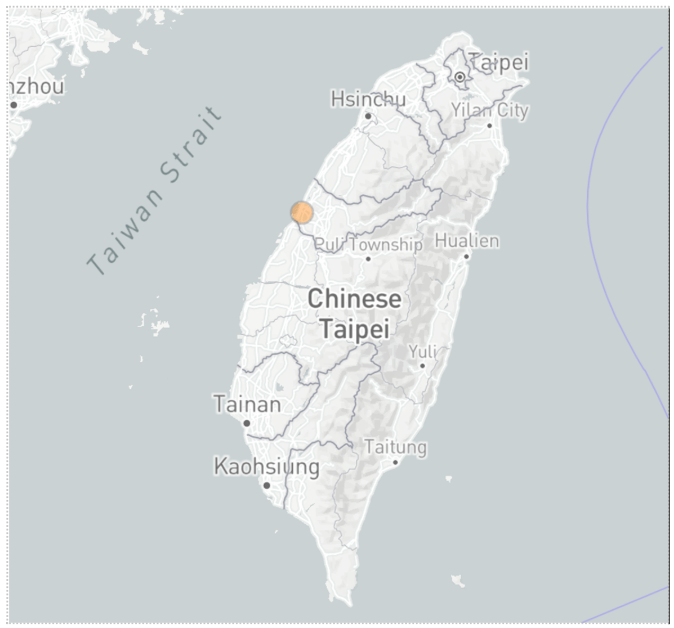
Taiwan is approximately 100 miles (160 km) off the southeastern coast of mainland China, separated by the Taiwan Strait. However, the closest point is much narrower, with some smaller Taiwanese-controlled islands, like Kinmen, being just a few miles from the Chinese mainland. Taiwan’s northernmost island is only 79 miles (128 km) from the northernmost island of the Philippines, Mavulis Island in Batanes.
Taiwan had recently become the only country in Asia formally recognized by WOAH as free from both ASF and classical swine fever. This dual recognition was solidified in May 2025 during the WOAH General Assembly, following Taiwan’s self-declaration of freedom from ASF on July 2, 2024. The ASF-free status is nullified by the recent diagnosis.
The CSF-free status was the culmination of an extensive, decade-long process that began with the last documented case in 2015. Taiwan submitted its formal CSF-free application to WOAH in August 2024, which was approved by the Scientific Commission in February 2025. This accomplishment builds on Taiwan’s earlier success in eliminating foot-and-mouth disease virus, from which it was declared free by WOAH in 2020.
The Swine Health Information Center, launched in 2015 with Pork Checkoff funding, protects and enhances the health of the US swine herd by minimizing the impact of emerging disease threats through preparedness, coordinated communications, global disease monitoring, analysis of swine health data, and targeted research investments. As a conduit of information and research, SHIC encourages sharing of its publications and research. Forward, reprint, and quote SHIC material freely. For more information, visit http://www.swinehealth.org or contact Dr. Megan Niederwerder at [email protected] or Dr. Lisa Becton at [email protected].