New World Screwworm: Fact Sheet & SHIC Article 6/10/2026 & USDA NWS Website
Pseudorabies Resources: Latest PRV Fact Sheet (Updated June 2024) & Additional PRV Resources/Links & Statement
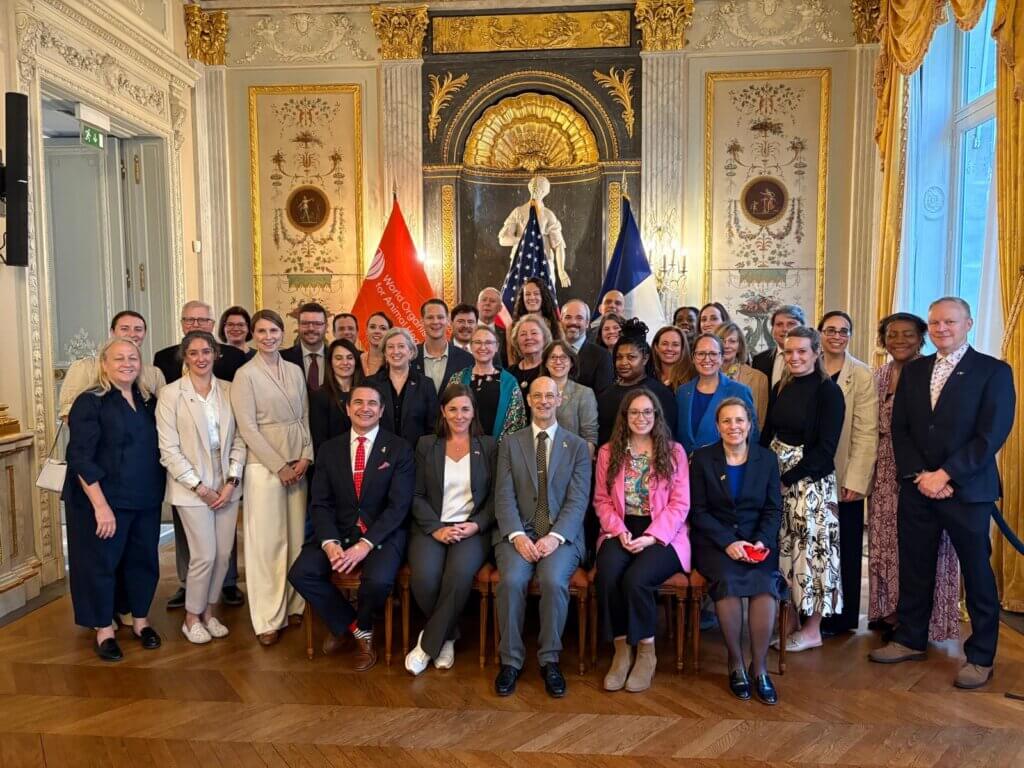
The 93rd General Session of the World Assembly of Delegates for the World Organisation for Animal Health was convened from May 18 – 22, 2026, in Paris, bringing together international animal health authorities from 183 member countries to establish global standards impacting livestock industries worldwide. This year, the US pork industry was represented by Swine Health Information Center Executive Director Dr. Megan Niederwerder and National Pork Producers Council Director of Swine Health Dr. Anna Forseth, who were invited to join the US delegation by USDA, the official WOAH delegate body. The presence and participation of the US delegation underscore the critical role of international collaboration in safeguarding domestic swine health and trade.
The 2026 General Session marked the 30th anniversary of WOAH’s official animal health status framework. The General Session is WOAH’s most important institutional event, providing an opportunity for delegates to adopt international standards, discuss technical topics of global interest, adopt administrative and technical resolutions, examine and approve various reports, and proceed with the election of vacant positions within certain governance bodies. During the meeting, WOAH announced new disease-status recognitions and endorsements of national control programs, including recognition of classical swine fever-free zones in Bolivia and Colombia, underscoring continued international progress in managing transboundary animal diseases.
As part of the General Session, WOAH organized a Forum themed “Investing in Animal Health and Welfare to Secure Everyone’s Future,” which highlighted the strategic role of animal health in economic stability, food security, and global health resilience. It explored solutions ranging from national resource prioritization and innovative financial partnerships to private sector engagement and research-based innovation. Discussions emphasized the importance of animal health in protecting global food security, economic stability, and public health through the One Health framework, which recognizes the interconnectedness of animal, human, and environmental health.
Delegates also approved WOAH’s 8th Strategic Plan and reviewed governance reforms aimed at modernizing the organization’s regional commissions and evaluating member-country financial contributions. Leaders, ministers, and veterinary organizations from around the world participated in discussions supporting science-based animal health policies and highlighting the critical role of veterinarians in disease prevention and response.
While the annual General Session serves as one of the world’s most influential forums for shaping international animal health, coordinated side events held alongside the General Session provide opportunities for further information sharing and collaboration. Drs. Niederwerder and Forseth participated in the side events entitled “HPAI vaccination and trade,” “Towards a Stronger Global FMD Control Strategy: Responding to an evolving risk landscape,” and the “4th Meeting of the GF-TADs Global Coordination Committee on African Swine Fever.”
During the FMD event, a concise global update on the status of the virus was shared along with an outline of key issues and priorities to support countries experiencing outbreaks. A global epidemiological overview of current FMD situations, along with emerging needs and challenges in surveillance, laboratory diagnosis, vaccination, and outbreak management was shared. Participants discussed priorities and mechanisms for enhancing disease control in affected countries. High level orientations for the revision of the Global FMD Control Strategy were discussed to identify strategic gaps and priorities for effective, sustainable, and high-impact actions. More details on the coordinated events are available here.
The Swine Health Information Center, launched in 2015 with Pork Checkoff funding, protects and enhances the health of the US swine herd by minimizing the impact of emerging disease threats through preparedness, coordinated communications, global disease monitoring, analysis of swine health data, and targeted research investments. As a conduit of information and research, SHIC encourages sharing of its publications and research. Forward, reprint, and quote SHIC material freely. For more information, visit http://www.swinehealth.org or contact Dr. Megan Niederwerder at [email protected] or Dr. Lisa Becton at [email protected].